
Why Carbon Calculations Are Estimates
Understanding uncertainty.
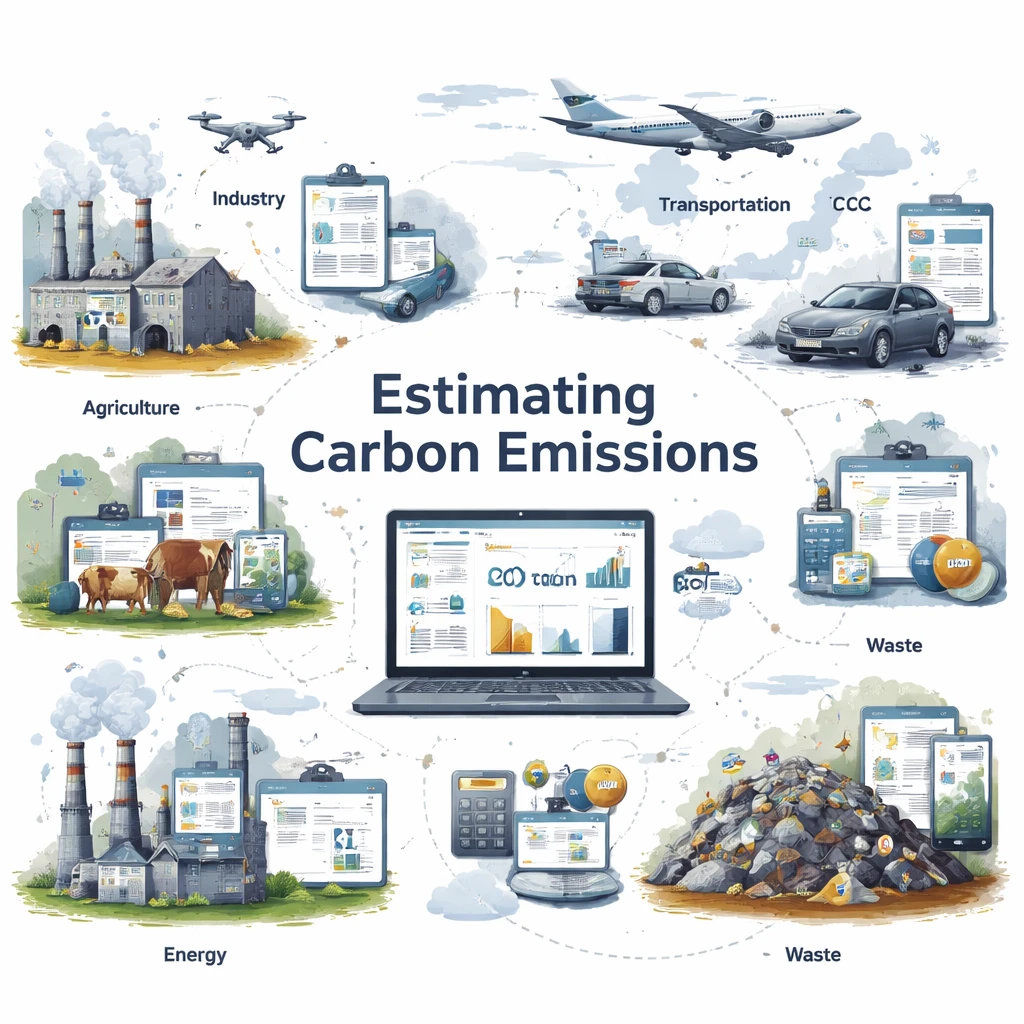
Learn why exact carbon measurements are not possible.
Calculating carbon emissions is a tool widely used to understand the impact of various activities on the environment. However, it is important to recognize that these calculations are estimates rather than exact measurements. This guide explores the reasons behind this, including the complexity of measuring emissions, limitations in available data, and the practical use of averages. By understanding these factors, readers can better interpret carbon calculations and use them responsibly in making informed decisions. ClimeOne provides tools that reflect these realities by presenting carbon footprint estimates with appropriate transparency.
1. Complexity of Emissions Measurement
Carbon emissions come from a vast range of sources such as transportation, energy use, food production, and manufacturing. Measuring emissions accurately requires detailed knowledge of processes, materials, and energy sources involved. Many activities produce multiple greenhouse gases, each with different impacts measured in carbon dioxide equivalent (CO₂e).
Additionally, some emissions happen indirectly through supply chains or land use changes. This makes emissions accounting highly complex and often beyond the scope of individual measurement efforts.
2. Data Limitations
Data needed to calculate emissions is not always available or consistent. For example, energy consumption figures may be rounded or based on estimates. Emission factors that translate activity data (like fuel use) into emissions are themselves averages derived from scientific studies and can vary by region, technology, and over time.
Moreover, individuals typically must rely on generalized data for products and services they consume, rather than exact figures tailored to their specific circumstances.
3. Use of Averages
Because precise data is often unavailable, carbon calculators use average emission factors and typical usage patterns. These averages help simplify the accounting process but introduce some uncertainty because individual situations can deviate from the norm.
For example, the emissions associated with driving a car can vary depending on vehicle model, maintenance, driving style, and fuel type. Calculators use standard assumptions to produce estimates that apply broadly rather than precisely.
4. Why Estimates Are Still Useful
Despite limitations, estimated carbon calculations provide valuable insight into relative impact and help identify areas where emissions may be higher or lower. They assist individuals and organizations in tracking changes over time and evaluating the potential effects of different choices.
ClimeOne’s platform focuses on offering such estimated footprints while explaining their basis and constraints clearly. This transparency supports informed interpretation rather than unrealistic expectations of precision.
5. Responsible Interpretation
When viewing carbon estimates, it is important to remember their approximate nature. They should be treated as guides rather than exact measurements. Using estimates responsibly means combining them with other information and context to support thoughtful decisions.
ClimeOne encourages users to consider calculated footprints as part of a broader understanding of environmental impact and not in isolation. Recognizing uncertainty helps maintain trust and avoids overstating the implications of specific figures.
Key Takeaways
- Carbon emissions measurement is inherently complex, involving multiple gases and indirect sources.
- Calculations rely on imperfect data, including generalized emission factors and incomplete activity information.
- Use of averages introduces uncertainty but enables practical estimation.
- Estimates remain useful for awareness, comparison, and tracking purposes despite limitations.
- Responsible interpretation involves understanding estimates as approximate and combining them with other considerations.
Understanding that carbon footprint results are estimates helps set realistic expectations. Tools like those from ClimeOne provide transparent calculations designed to inform thoughtful reflection and responsible use.
Ready to take action?
Calculate your carbon footprint and see how ClimeOne can help you track and reduce your impact.