
What Is a Carbon Footprint?
Understanding what carbon footprints measure — and what they don’t.
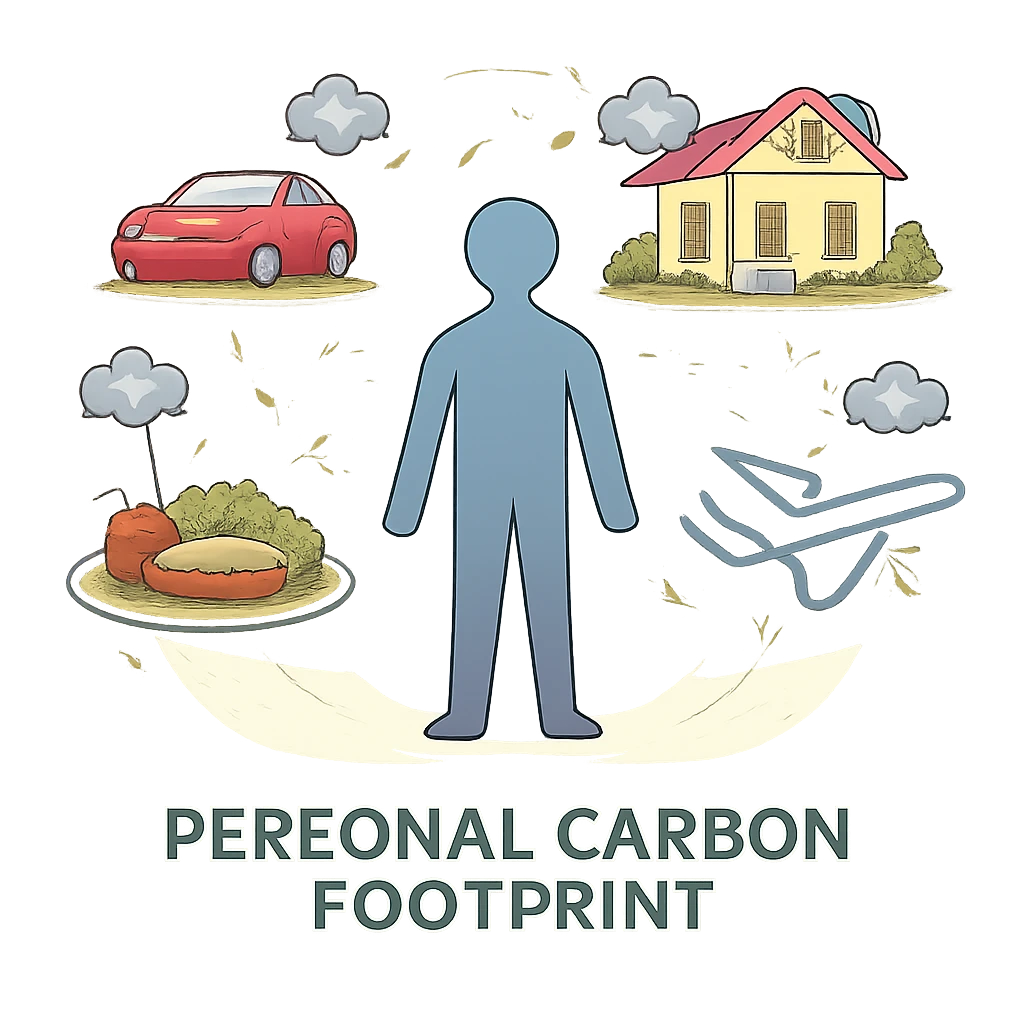
A plain-language explanation of carbon footprints and why they are estimates, not exact measurements.
Everyone hears about carbon footprints these days, but what exactly does the term mean? Simply put, a carbon footprint is an estimate of the total amount of greenhouse gases that are released into the atmosphere because of human activities. This guide explains what makes up a carbon footprint, the challenges of measuring it precisely, and why understanding it can be helpful in everyday life. You don’t need any special background to learn about carbon footprints. We will keep things straightforward and use examples you can relate to. By the end, you should have a clearer idea of how your daily actions relate to climate impact and how tools like ClimeOne can assist in understanding this better.
1. What Is a Carbon Footprint?
A carbon footprint measures the total greenhouse gases linked to activities, products, or organizations. For individuals, it often refers to the emissions caused by everyday choices like driving a car, heating your home, or the food you eat. Essentially, it’s a way to understand how much human activity contributes to the gases that affect Earth’s climate.
2. What Emissions Are Included? Understanding CO₂ and CO₂e
The most common greenhouse gas is carbon dioxide, or CO₂. It comes from burning fossil fuels like gasoline or natural gas. But there are other gases too, such as methane and nitrous oxide, which also trap heat in the atmosphere.
To keep things simple, scientists often talk about CO₂ equivalent, or CO₂e. This term adds up all greenhouse gases by converting them into the amount of CO₂ that would have the same warming effect. So, when you see carbon footprints expressed in kilograms or tons of CO₂e, it’s a combined number representing multiple greenhouse gases.
3. Common Sources of Personal Emissions
Many daily activities can add up in terms of emissions. Some common examples include:
- Transportation: Driving a car, riding a bus, flying in airplanes.
- Home energy use: Heating or cooling your home, using electricity from the grid.
- Food: Producing and transporting what you eat, especially meat and dairy products.
- Goods and services: Manufacturing, shipping, and disposing of the products you buy.
Each activity contributes differently depending on how much energy or resources it uses.
4. What Is Difficult or Impossible to Measure Precisely?
While the idea of a carbon footprint is helpful, measuring it exactly is challenging. Some reasons include:
- Complex supply chains: Many products involve materials and transportation from around the world, making it hard to trace every emission.
- Variation in data quality: Emission factors (numbers used to estimate emissions) can differ depending on the source and method.
- Indirect emissions: Some impacts happen far upstream or downstream of our activities and can be overlooked.
- Estimating lifestyle factors: Daily habits vary widely, so averages or estimates may not capture individual differences perfectly.
Because of these challenges, carbon footprints are best seen as informed estimates rather than exact counts.
5. Why Carbon Footprints Are Still Useful Despite Uncertainty
Even with measurement limitations, carbon footprints help raise awareness about how our actions relate to greenhouse gas emissions. They can guide decisions by showing which activities or products have larger impacts compared to others. For example, understanding that flying tends to produce more emissions than taking a train may help you consider alternatives when possible.
Carbon footprint estimates also enable tracking changes over time. If you adjust energy use or transportation habits, your footprint can reflect progress. This information supports responsible choices without requiring perfect precision.
Using ClimeOne To Understand Your Carbon Footprint
ClimeOne offers tools that help individuals estimate and learn about their carbon footprints. By inputting information about your travel, home energy, and consumption, ClimeOne provides an overview based on current estimates and data sources. The platform highlights where estimates involve uncertainty and encourages users to interpret results thoughtfully.
Overall, understanding your carbon footprint is a useful step toward being informed about climate impact, even if exact numbers aren’t always available. Tools like ClimeOne are designed to support this learning in a clear and transparent way.
Key Takeaways
- A carbon footprint estimates greenhouse gas emissions linked to human activities.
- Carbon footprints include carbon dioxide and other gases combined as "CO₂ equivalent" (CO₂e).
- Common personal emission sources include transportation, home energy, food, and goods.
- Exact measurement is difficult due to complex supply chains, data variation, and indirect emissions.
- Despite uncertainties, carbon footprints help understand impact and guide informed decisions.
Understanding your carbon footprint is a practical way to learn how everyday choices relate to climate impact. ClimeOne provides accessible tools to help you estimate your footprint and explore where your emissions come from, supporting clearer knowledge without requiring exact precision.
Ready to take action?
Calculate your carbon footprint and see how ClimeOne can help you track and reduce your impact.