
What Happens After You Offset Carbon
From contribution to impact reporting.
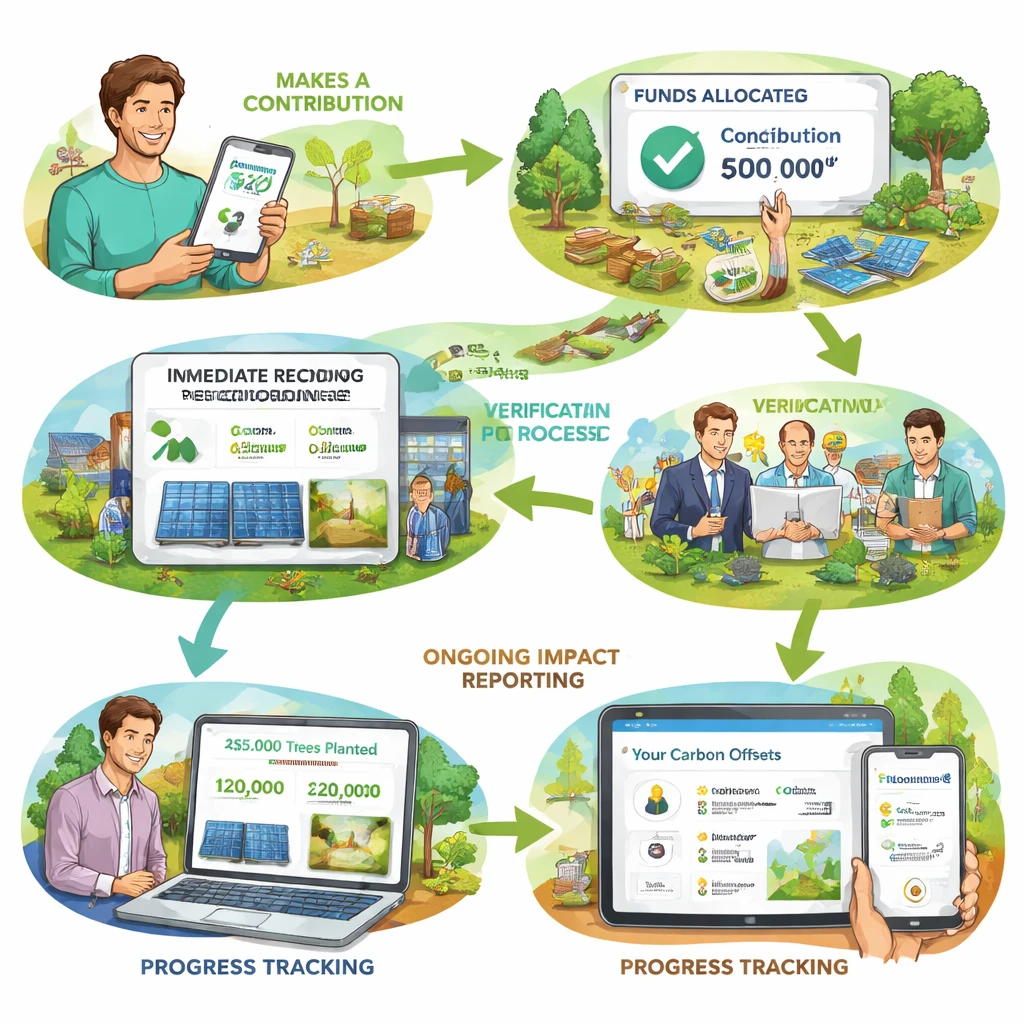
Learn what happens behind the scenes after you make an offset contribution through ClimeOne.
Offsetting your carbon emissions is a practical step toward addressing climate change. Many individuals wonder what actually happens after they make an offset—where their money goes, how projects are managed, and how progress is monitored over time. This guide offers a clear explanation of the process following a carbon offset transaction to help you understand how your contribution supports environmental projects. By exploring the immediate steps after an offset, the allocation of funds, verification processes, ongoing impact reporting, and methods ClimeOne uses to track progress, you can gain realistic expectations and insights into the broader picture of carbon offsetting. With this knowledge, you can interpret your offset contributions thoughtfully and responsibly.
1. What Happens Immediately After an Offset Is Made
Once you complete a carbon offset transaction, the process begins with recording your contribution to support carbon reduction or removal projects. Your offset represents a quantified amount of greenhouse gas emissions that you aim to balance out by funding activities that reduce or capture an equivalent amount elsewhere.
Immediately after the transaction, your contribution is logged within the platform's system, confirming your participation and the amount of carbon offset. This step sets in motion the allocation of funds towards selected projects that create environmental benefits aligned with your offset.
2. How Funds Are Allocated to Projects
The money from your carbon offset is pooled together with funds from other contributors and directed to specific projects chosen based on criteria such as environmental impact, additionality, and community benefits.
Projects can include activities like planting trees to absorb CO₂, supporting renewable energy generation, or improving sustainable land management. The allocation aims to support measurable emissions reductions or removals that would likely not have occurred without this financial backing.
Project managers use the funding to carry out planned actions, maintain operations, and report progress related to emissions reduction or removal.
3. What Verification Means in Practice
Verification is a process through which independent auditors assess projects to ensure they genuinely reduce or remove the amount of carbon dioxide claimed. This typically involves reviewing project documentation, onsite inspections, and monitoring data.
For contributors, verification means that the project meets established standards designed to prevent double counting and verify that emissions reductions are real, measurable, and additional to what would have happened anyway.
This adds confidence that your offset supports credible climate action, although verification does rely on estimates and periodic checks rather than continuous measurement.
4. Why Impact Is Reported Over Time
Carbon offset projects often operate over multiple years, and the environmental benefits accrue gradually. Reporting impact over time allows project developers and platforms like ClimeOne to provide updates on ongoing emissions reductions or carbon removals.
This longer-term approach acknowledges that carbon storage or emissions avoidance is not always instantaneous. For example, new trees take time to grow and sequester carbon, and renewable energy projects reduce emissions continuously over their operational life.
Regular reports help contributors understand how their offsets contribute to sustained climate benefits rather than a one-time event.
5. How ClimeOne Tracks and Reports Progress
ClimeOne manages records of your carbon offset transactions and the projects supported, offering transparent updates on funded activities over time. The platform provides accessible information about project status, verified emissions reductions, and impact metrics.
Through your ClimeOne account, you can view details about your offsets, follow project developments, and receive summaries that reflect ongoing progress. This helps you interpret the impact of your contribution within the context of broader climate efforts.
Key Takeaways
- After making a carbon offset, your contribution is recorded and directed to environmental projects.
- Funds support activities that reduce or remove greenhouse gas emissions over time.
- Independent verification ensures projects meet standards of credibility and measurable impact.
- Impact reporting occurs over months or years to reflect ongoing climate benefits.
- ClimeOne provides transparent tracking and updates on your offset projects' progress.
You can monitor the ongoing impact of your carbon offsets through ClimeOne’s platform, which provides clear information and updates to help you understand how your contributions support climate action over time.
Ready to take action?
Calculate your carbon footprint and see how ClimeOne can help you track and reduce your impact.