
What Carbon Offsetting Does — and Does Not Do
An honest look at what offsetting can and cannot accomplish.
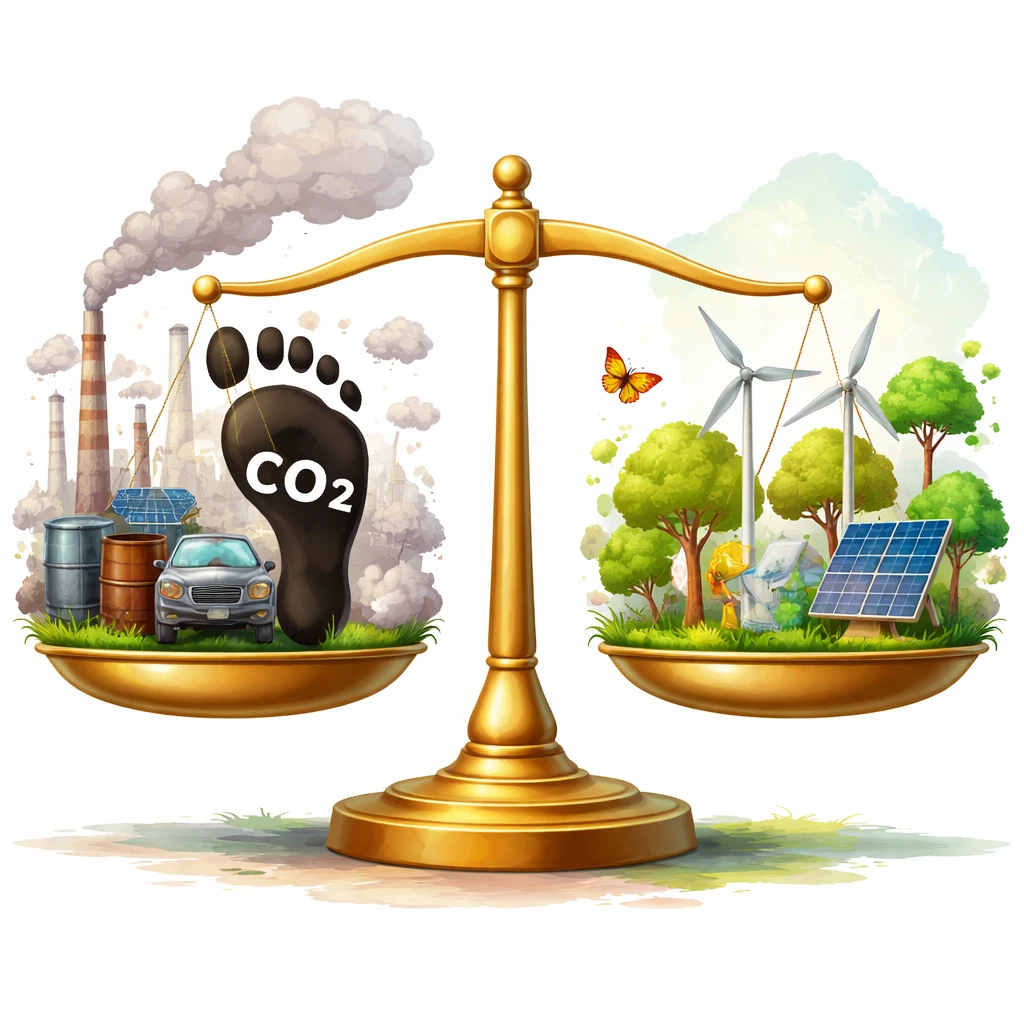
Understand the role carbon offsetting plays, its limits, and how it fits into broader climate action.
Carbon offsetting is a concept many individuals encounter when thinking about how to manage their climate impact. It involves compensating for emissions by supporting projects that reduce, avoid, or remove greenhouse gases elsewhere. This guide aims to clarify what carbon offsetting is intended to achieve, where it has strengths, and its limitations. The topic can seem complex, with varied perspectives on its effectiveness and role in climate efforts. Understanding offsetting with measured, transparent information can help you make informed decisions as part of your approach to climate responsibility. We will also highlight common misunderstandings and explain how offsetting fits into broader climate actions, including how platforms like ClimeOne approach it responsibly and openly.
1. What Carbon Offsetting Is Intended to Do
Carbon offsetting allows individuals or organizations to compensate for their own greenhouse gas emissions by funding projects that reduce or remove an equivalent amount of emissions elsewhere. The basic idea is to balance emissions that are difficult to eliminate immediately by supporting activities such as reforestation, renewable energy development, or methane capture.
Offsetting projects generate what are called carbon credits, each representing a metric ton of carbon dioxide equivalent either avoided or removed from the atmosphere. When you purchase these credits, you support these projects financially, which ideally leads to a net reduction in global emissions.
2. What Offsetting Does Well
Offsetting can contribute to directing funds towards climate-friendly projects that might otherwise have insufficient investment. This can support environmental benefits beyond carbon, such as improved biodiversity, soil health, and local community development.
Additionally, offsetting provides a measurable way for individuals and companies to take responsibility for emissions they currently cannot reduce, complementing efforts to lower footprints through behavior or technology.
Transparency and verification processes help ensure that many offset projects are real and contribute to emissions reductions or removals. Through platforms such as ClimeOne, users can track, estimate, and support vetted projects with clear information about their impacts.
3. What Offsetting Cannot Do
While offsetting can play a supporting role, it is important to recognize its limits. Offset credits do not cancel out emissions in the air directly, nor do they replace the need to reduce personal or organizational emissions as much as possible.
Offsets cannot resolve all environmental or social challenges related to climate change. Some projects may have uncertainties about the permanence of emissions reductions, measurement accuracy, or unintended side effects.
Offsetting should not be seen as a license to continue high emissions indefinitely, but rather as one part of a broader strategy that includes reducing energy use, choosing low-carbon options, and supporting systemic change.
4. Common Misunderstandings About Offsetting
- Offsetting ‘erases’ your emissions: Offsets represent estimated balance, but the physical emissions remain in the atmosphere. The effects rely on the actual performance and ongoing verification of projects.
- All offsets are the same quality: Project types, standards, and geographic contexts vary, affecting reliability and impact.
- Offsetting alone is sufficient climate action: Offsetting is complementary, not a complete solution.
- Offsets always provide additional benefits: Additionality — the idea that projects generate emissions reductions that would not have happened otherwise — is essential but can be challenging to establish.
5. How Offsetting Fits Into Broader Climate Responsibility
Responsible climate action typically involves prioritizing direct emissions reductions where feasible and viewing offsetting as a supplementary measure. It includes thoughtful choices about consumption, energy use, and supporting policies that promote sustainable systems.
Individuals can use tools like ClimeOne to estimate their carbon footprint, track progress over time, and select offset projects that align with their values and provide transparent, verified impact information.
In this way, offsetting supports broader efforts by channeling resources into climate projects, while transparency and humility about its limits encourage continual improvement and awareness.
At ClimeOne, our approach to offsetting emphasizes transparency and responsible communication. We provide clear information about the estimation methods, project details, and remaining uncertainties involved. Our goal is to help users understand both the benefits and limitations of offsetting so they can make informed decisions aligned with their personal climate goals.
Key Takeaways
- Carbon offsetting helps balance emissions by supporting projects that reduce or remove greenhouse gases elsewhere.
- Offsetting can direct funds to valuable climate projects but does not remove emissions directly from the atmosphere.
- Offsets have limitations, including uncertainties about measurement, permanence, and additionality.
- Common misunderstandings include thinking offsets completely cancel emissions or are equivalent in quality.
- Offsetting complements, but does not replace, efforts to reduce emissions and adopt sustainable practices.
- Transparency and careful consideration are essential to responsible offsetting decisions.
Understanding carbon offsetting with clear and balanced information supports responsible climate action. Tools like ClimeOne aim to assist individuals in tracking their impact and engaging with offset projects transparently, recognizing both their potential and their limits.
Ready to take action?
Calculate your carbon footprint and see how ClimeOne can help you track and reduce your impact.