
What Does It Mean to Offset a Product?
Understanding product-related offsets.
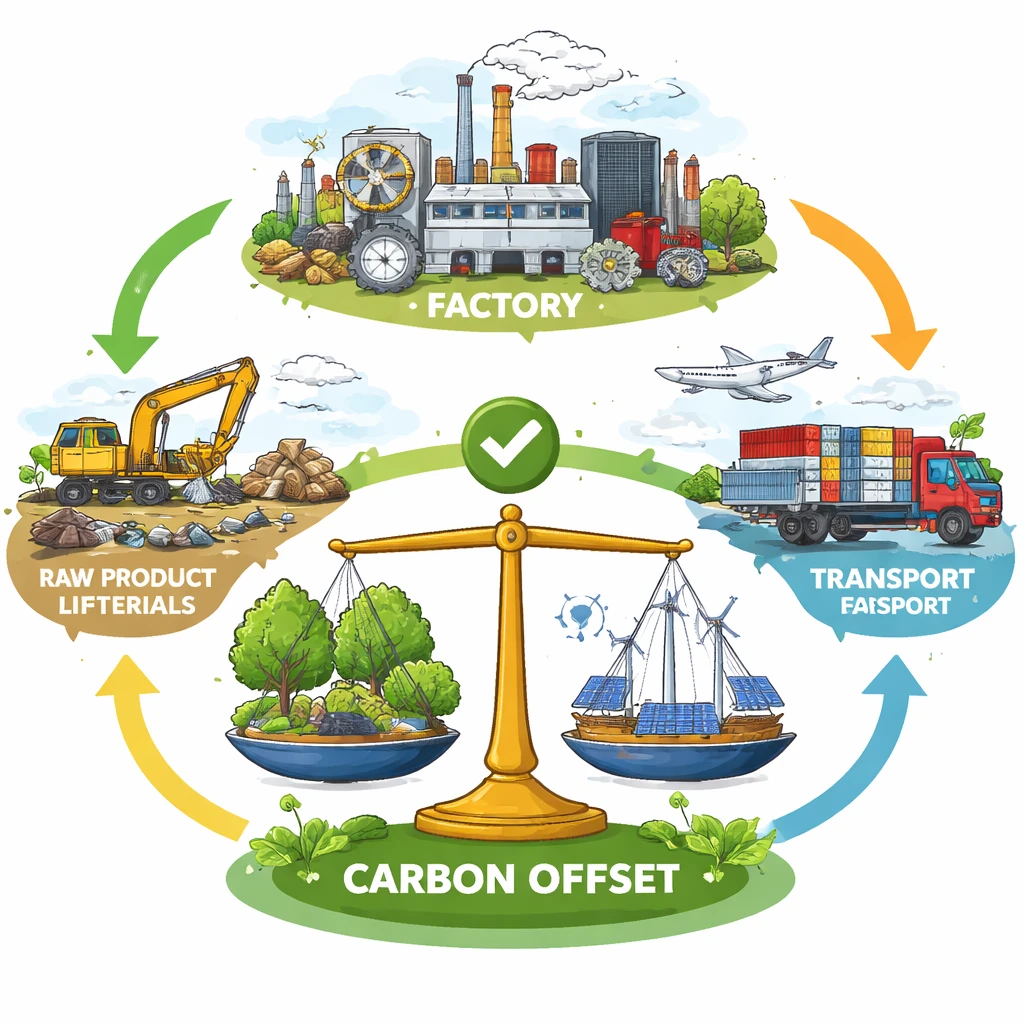
A clear explanation of what it means to offset the emissions associated with a product.
Many people want to understand how the environmental impact of everyday products is measured and managed. One concept that often comes up is "offsetting" the carbon footprint of a product. This guide explores what it means to offset a product, starting from how emissions are associated with a product's lifecycle to the practical application of offsets. The goal is to provide clear, straightforward information that helps you interpret carbon offset efforts without confusion or unrealistic expectations. We will also highlight how tools like ClimeOne can assist in tracking and understanding impacts with transparency.
1. Product Lifecycle Emissions
Every product you use involves a series of steps before it reaches you, and each step can produce greenhouse gas emissions. These emissions together are often called the product's carbon footprint.
The main phases in a product's lifecycle typically include:
- Raw Material Extraction – Obtaining materials like metals, wood, or plastics.
- Manufacturing – Turning those materials into the final product.
- Transportation – Moving the product from the factory to stores or consumers.
- Use – Emissions generated while using the product (for some products).
- End of Life – Disposal, recycling, or breakdown of the product.
This guide focuses mainly on emissions related to manufacturing and transport phases, which are often significant contributors.
2. Manufacturing and Transport
Manufacturing involves energy use, often from fossil fuels, and can produce emissions from chemical processes. Transport emissions depend on the mode (truck, ship, airplane), distance, and fuel efficiency.
For example, shipping a product by sea generally results in fewer emissions per kilogram than air freight. However, many products travel through complex routes, sometimes combining multiple transport methods, making exact emission calculations challenging.
3. Why Exact Numbers Are Hard
Estimating a product’s carbon footprint involves many variables and assumptions. Challenges include:
- Data Availability: Precise emissions data for factories or transport routes may not be publicly available.
- Variability: Emissions can vary with energy sources, technology efficiency, and production batches.
- Boundaries: Deciding which stages to include can differ between analyses.
- Allocation: For products sharing materials or factories with other goods, attributing emissions accurately is complex.
Because of these factors, carbon footprints are best seen as estimates that can guide understanding rather than exact measurements.
4. How Offsets Are Applied
Offsetting involves compensating for estimated emissions by supporting activities that reduce or remove greenhouse gases elsewhere. Examples include planting trees, investing in renewable energy, or capturing methane from landfills.
When a product is said to be "carbon offset," it means that an amount of emissions roughly equivalent to its estimated footprint has been balanced out by these projects.
This does not mean the product’s emissions disappear, but rather there is an attempt to balance the impact. Offsets are usually purchased through verified schemes that track emission reductions to ensure credibility.
5. Interpreting Results Responsibly
Understanding product offsets requires careful consideration:
- Recognize Estimates: Both footprints and offset amounts are estimates based on certain assumptions.
- Look for Transparency: Trustworthy sources provide details about how footprints and offsets are calculated.
- Consider Overall Impact: Offsetting complements but does not replace efforts to reduce emissions.
- Use Tools Like ClimeOne: Platforms that allow tracking product footprints and offsets can help consumers make informed decisions based on transparent data.
By viewing offsets as one part of a broader approach to managing climate impact, consumers can better interpret claims about carbon-neutral or offset products.
Key Takeaways
- A product’s carbon footprint includes emissions across its lifecycle, mainly from raw material extraction, manufacturing, and transportation.
- Calculating exact emissions is difficult due to data variability, assumptions, and complex supply chains.
- Carbon offsets compensate estimated emissions by funding projects that reduce or remove greenhouse gases elsewhere.
- Offsetting balances but does not eliminate a product’s emissions; it is an estimated approach, not a perfect solution.
- Careful interpretation of offset claims involves understanding estimates, transparency, and the role of offsets within wider emission reduction efforts.
Exploring product carbon footprints and offsets with tools like ClimeOne can help you better understand environmental information and make choices aligned with your values and the data available.
Ready to take action?
Calculate your carbon footprint and see how ClimeOne can help you track and reduce your impact.