
How Transportation Affects Your Carbon Footprint
Cars, flights, and everyday travel explained.
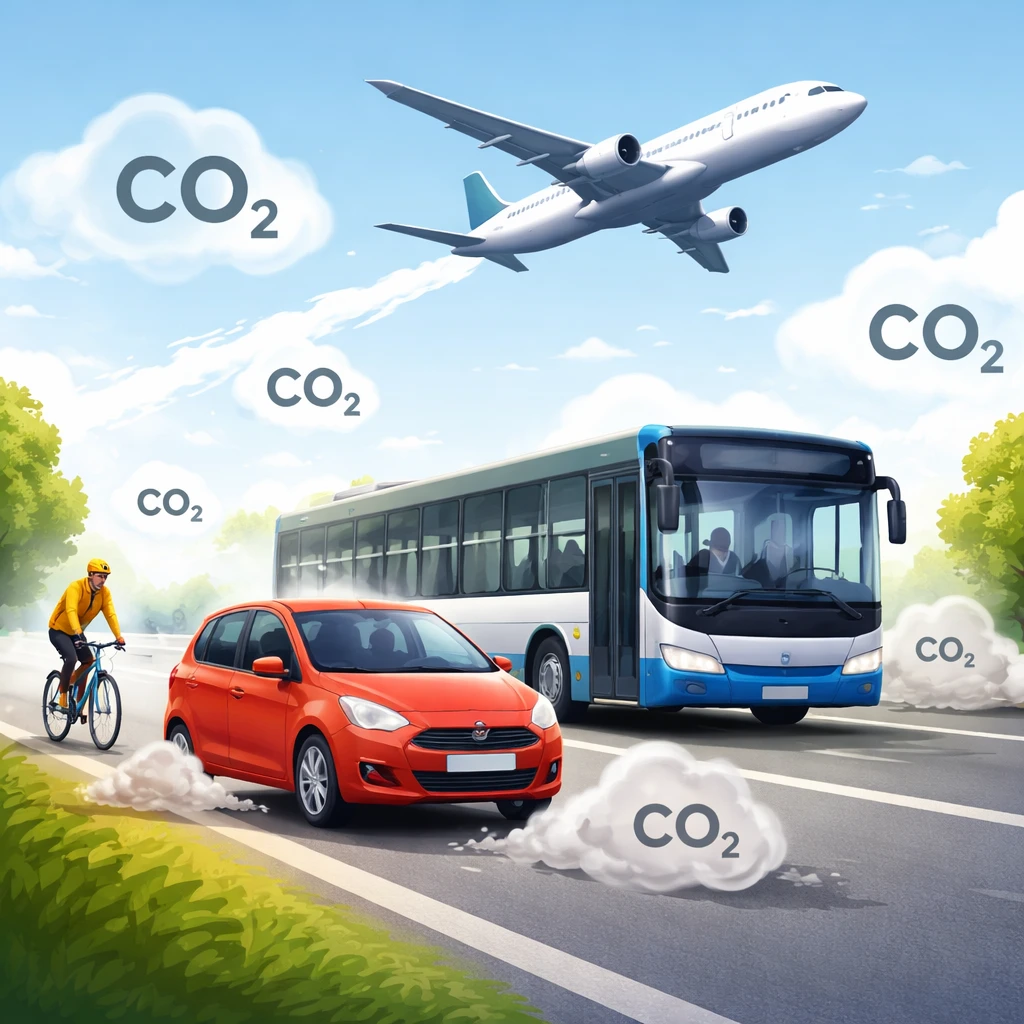
Understand how different transportation choices influence emissions.
Transportation is a significant part of many people's daily lives and can contribute noticeably to an individual's carbon footprint. Understanding how various types of transportation affect carbon emissions can help you make informed choices and better interpret your own impact. This guide explains the main sources of transportation emissions, compares common travel options, explores how distance influences flight emissions, and clarifies why estimates of emissions may differ. Finally, it offers tips on how to view these estimates with a practical mindset and describes how ClimeOne approaches transportation emissions estimation.
1. Types of Transportation Emissions
Transportation emissions primarily come from burning fossil fuels for energy. For most personal travel, this means the carbon dioxide (CO2) released when gasoline, diesel, or jet fuel is combusted.
There are two main categories of transportation emissions to consider:
- Direct emissions: These are the emissions released from the vehicle's fuel combustion during travel, such as a car engine burning gasoline or a plane engine using jet fuel.
- Indirect emissions: These include emissions from producing and transporting the fuel itself, as well as vehicle manufacturing and maintenance. Though indirect emissions contribute to your overall footprint, they are typically accounted for separately in detailed assessments.
Most consumer carbon calculators, including ClimeOne's, focus on estimating direct emissions from fuel combustion when considering transportation.
2. Driving vs Public Transit
Personal cars and public transit differ in how much carbon they emit per passenger. A personal car emits emissions based on its fuel efficiency and the number of miles driven.
Public transit modes, such as buses or trains, generally carry multiple passengers simultaneously, which spreads the emissions over more people, often resulting in lower average emissions per passenger mile.
However, these figures can vary widely depending on the type of vehicle, fuel used, occupancy rates, and local infrastructure.
For example, a fully occupied bus running on diesel may have lower emissions per passenger mile compared to a nearly empty electric vehicle charged from fossil-based electricity.
3. Flights and Distance
Air travel emissions per passenger tend to increase with distance but not in a simple linear way. Short flights often have a higher emissions rate per mile because a significant portion of fuel is burned during takeoff and landing phases.
Longer flights are more fuel-efficient per mile but still emit large amounts of CO2 overall due to the long distances traveled.
Additional factors, such as aircraft type, seating configuration, and load factor, also influence per passenger emissions.
4. Why Estimates Vary
Estimating transportation emissions involves many variables and assumptions, which can lead to different results across calculators and tools.
- Variations in fuel types and blends
- Differences in vehicle or aircraft efficiency
- Occupancy rates and load factors
- Regional differences in energy production (for electric vehicles)
- Data sources and emission factors used by calculators
As a result, transportation-related carbon footprint estimates should be seen as approximate values rather than exact measurements.
5. How to Think About Transportation Impact
Understanding your transportation footprint can help provide context for your overall emissions and identify opportunities for improvement if desired.
It is useful to focus on broader patterns over time rather than individual trips, recognizing that variations in data and assumptions affect exact numbers.
Knowing that estimates have uncertainty encourages a balanced view and supports thoughtful decisions rather than pressure to be perfectly precise.
How ClimeOne Estimates Travel Emissions
ClimeOne uses recent, peer-reviewed emission factors and data from reputable organizations to estimate transportation emissions based on the type of travel and distance reported.
For personal vehicles, ClimeOne considers average fuel economy and typical emission factors. For public transit and flights, it applies widely accepted average emission values tailored to travel modes and distances.
ClimeOne presents these estimates transparently, highlighting their approximate nature to support informed understanding rather than exact accounting.
Key Takeaways
- Transportation emissions mainly result from burning fuel during travel.
- Public transit often results in lower emissions per passenger mile compared to personal cars, depending on occupancy and fuel type.
- Flight emissions depend on distance, with short flights being less fuel-efficient per mile than longer ones.
- Estimates of transportation emissions vary due to many factors and assumptions.
- Viewing transportation impact as approximate helps in responsibly understanding and managing your carbon footprint.
Using tools like those offered by ClimeOne can help you estimate and track your transportation emissions while understanding their limitations. This informed perspective supports practical engagement with your carbon footprint data.
Ready to take action?
Calculate your carbon footprint and see how ClimeOne can help you track and reduce your impact.