
How to Calculate Your Carbon Footprint
A clear, practical guide to understanding your personal carbon impact.
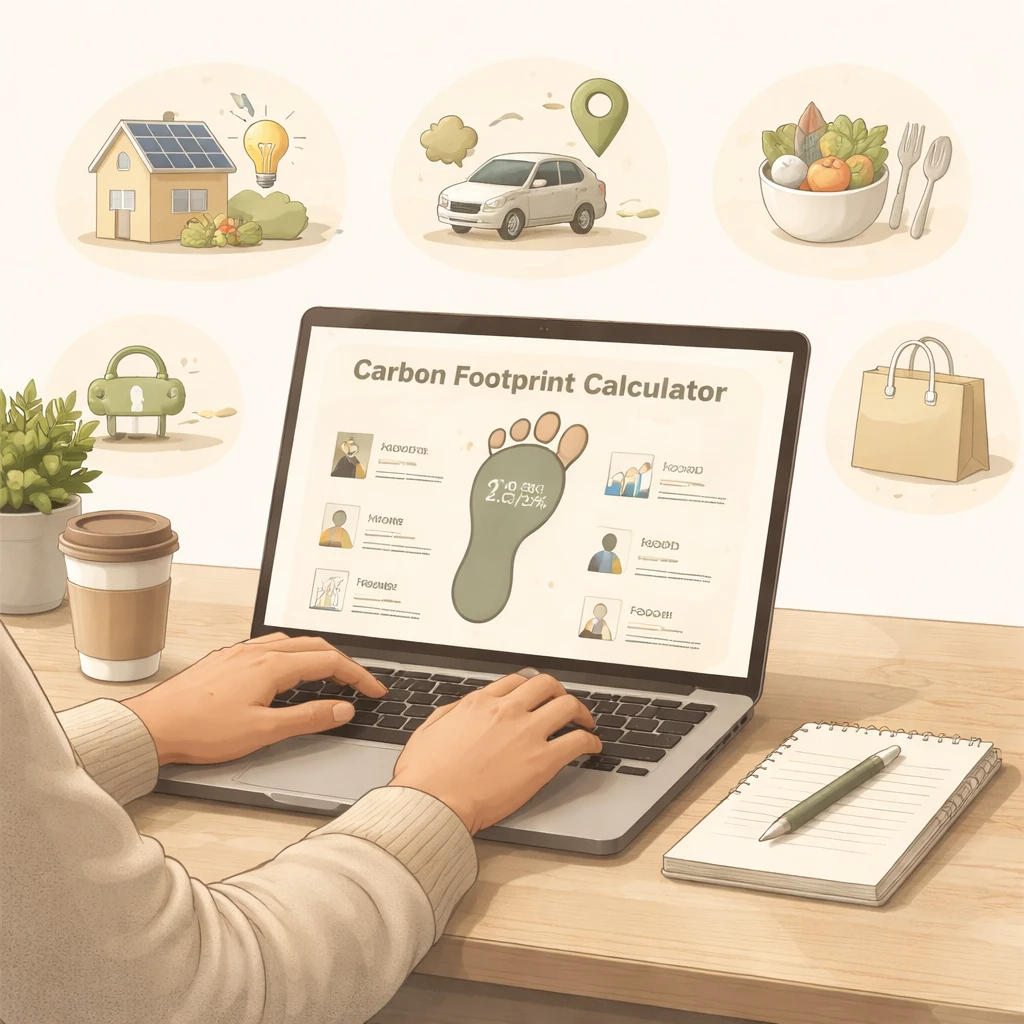
Learn what a carbon footprint is, what factors matter most, and how ClimeOne estimates your impact.
A carbon footprint measures the amount of greenhouse gases, mainly carbon dioxide (CO2), that are released into the atmosphere as a result of your activities. These gases contribute to changes in the Earth's climate over time. Understanding your personal carbon footprint can help you learn more about how daily choices and habits relate to environmental impact.
This guide explains what a carbon footprint involves, which types of activities contribute to it, and how estimates are made. It also introduces how ClimeOne's tools calculate carbon footprints and how to interpret those results with practical perspective.
What Is Included in a Personal Carbon Footprint?
Your personal carbon footprint typically includes emissions from several main areas. Each area relates to common activities or goods in daily life.
Home Energy
This covers emissions related to electricity, heating, and cooling used in your home. For example, burning natural gas for heating or the electricity used to power appliances and lights contribute to your footprint. The exact amount depends on the energy sources and how much you consume.
Transportation
Travel by car, bus, train, airplane, or other vehicles produces emissions. These come primarily from burning fuels like gasoline, diesel, or jet fuel. The distance traveled and type of fuel used both affect the emissions estimated.
Food
The food you eat contributes to emissions based on its production, processing, transportation, and packaging. Different foods generally have different greenhouse gas footprints due to how they are grown or raised and where they come from.
Purchases and Lifestyle
Other goods and services you use, such as clothing, electronics, household items, and entertainment, also generate emissions during their production and distribution. These are less direct but still part of an overall estimate.
Why Carbon Footprints Are Estimates, Not Exact Measurements
Calculating a carbon footprint involves using data averages, models, and assumptions about energy use and emissions factors. Since many variables are involved—from energy mix in your region to specific behaviors—it is not possible to measure exact emissions for every activity.
As a result, carbon footprints are best understood as informed estimates that provide insight rather than precise numbers. Recognizing this helps interpret results thoughtfully.
How ClimeOne Calculates a Footprint
ClimeOne uses information you provide about your home energy use, travel habits, diet, and consumption patterns. It connects that information with emission factors and data sources to estimate your total footprint.
The process involves combining average emissions associated with different activities and products relevant to your lifestyle. By aggregating these estimates, ClimeOne presents a personalized footprint that reflects your overall emissions in one number.
How to Interpret Footprint Results Responsibly
Use your footprint as a way to understand the relative impact of different parts of your life and identify potential areas for further inquiry, rather than as an exact measure. Because estimates have uncertainties, it's helpful to consider the results as a guide to learn more about how your activities relate to emissions.
Remember that variations in data quality, assumptions, and personal circumstances affect the calculation. A thoughtful approach acknowledges these limits and avoids undue certainty.
What to Do After Calculating Your Footprint
After you know your estimated footprint, you can track changes over time using tools like ClimeOne to better understand trends and habits. This can help you explore how different choices impact emissions.
You might also use the results as a starting point to learn more about climate impact, energy sources, and sustainable practices. If desired, you can explore options to balance emissions, such as supporting verified carbon offset projects.
Whatever you choose, the focus can remain on informed understanding rather than pressure to change quickly.
Key Takeaways
- A carbon footprint estimates greenhouse gas emissions from daily activities including home energy, transportation, food, and purchases.
- Estimations are based on averages and assumptions, so footprints are not exact measurements but useful guides.
- ClimeOne calculates footprints by combining your activity data with emission factors to provide a personalized estimate.
- Interpret results thoughtfully, understanding the limits and uncertainties involved in the calculations.
- After calculating, you can track your footprint and explore further learning or offsetting, based on your interests.
If you're curious about your own carbon footprint, consider using ClimeOne's calculator to see an estimate based on your lifestyle. This can be a helpful first step in understanding your climate impact with clarity and balance.
Ready to take action?
Calculate your carbon footprint and see how ClimeOne can help you track and reduce your impact.