
How ClimeOne Estimates Carbon Impact
The data, assumptions, and methodology behind ClimeOne’s calculations.
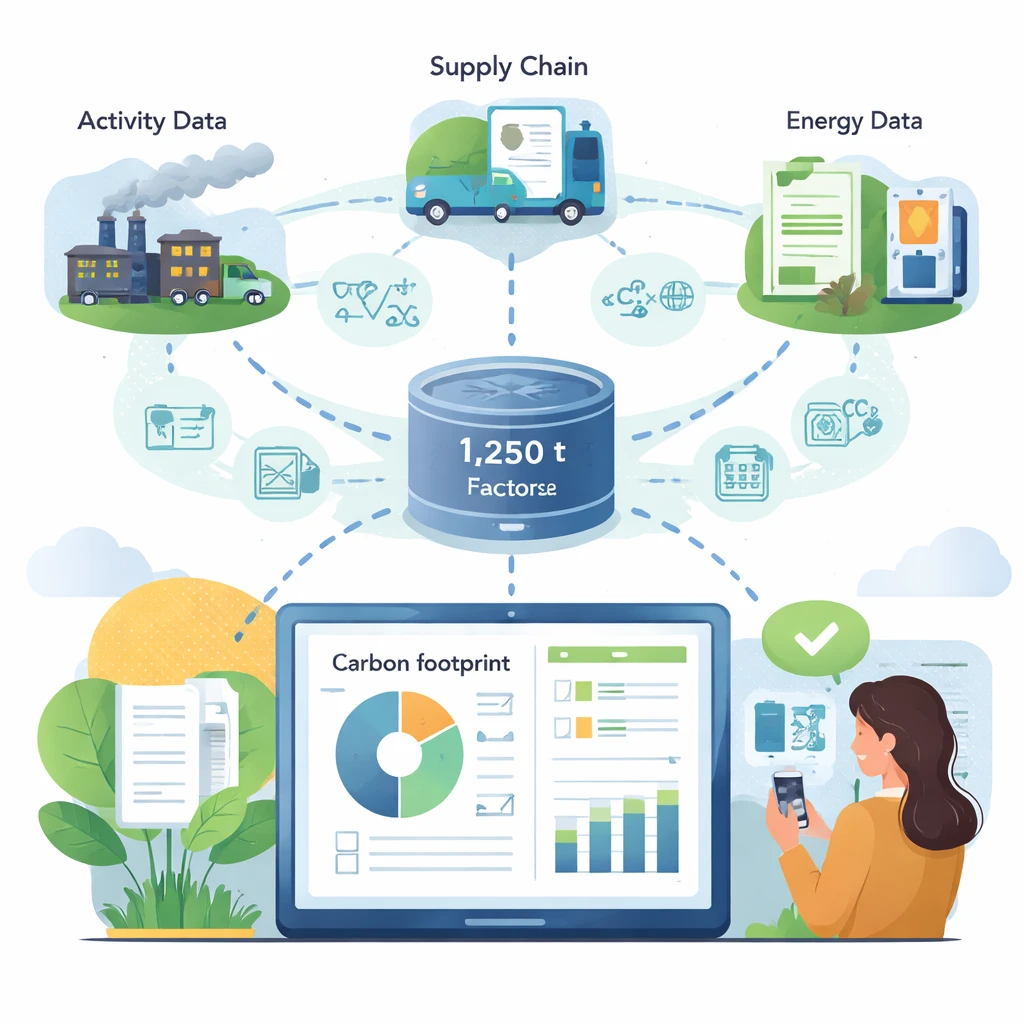
A transparent overview of how ClimeOne uses publicly available data to estimate carbon impact.
Estimating carbon impact involves assessing the greenhouse gas emissions associated with various activities, products, or services. Because direct measurement is often impractical for individual consumers, estimations rely on a combination of data sources, assumptions, and modeling. This guide explains how ClimeOne approaches these estimates to provide users with useful insights while emphasizing transparency about the inherent uncertainties. Understanding the process behind carbon impact estimation can help users interpret their results thoughtfully. This guide covers why estimations are necessary, the types of data used, the role of averages and assumptions, sources of uncertainty, and how ClimeOne communicates these factors responsibly. By gaining insight into these methods, users can better appreciate the strengths and limitations of carbon impact numbers and use them effectively as a tool within a broader perspective on climate impact.
1. Why Carbon Impact Must Be Estimated
Carbon impact refers to the amount of greenhouse gases, mainly carbon dioxide, associated with a specific activity or product. Measuring these emissions directly at a detailed, individual level is often not feasible due to complexity, cost, and the invisible nature of emissions themselves.
Therefore, estimation is necessary. This involves using available data, scientific studies, and models to approximate the emissions linked to different behaviors, purchases, or services. Estimations are essential for individuals to gain awareness and make informed decisions related to climate impact.
2. Types of Data Used in Emissions Estimation
ClimeOne uses several types of data to inform carbon impact estimates, including:
- Activity data: Information about user behaviors, such as travel distances, energy use, or consumption patterns.
- Emission factors: Numbers representing average emissions per unit of activity, usually derived from scientific research or official databases. For example, kilograms of CO₂ emitted per kilowatt-hour of electricity consumed.
- Supply chain data: Estimates of emissions involved in production, transportation, and disposal related to products or services.
These data sources come from recognized research, governmental statistics, and international organizations. ClimeOne selects data that are transparent about their origins and methodologies.
3. Use of Averages and Assumptions
Because individual circumstances can vary widely, ClimeOne often relies on averages and reasonable assumptions to bridge gaps where direct data are unavailable.
For example, emission factors might represent an average across a country or region rather than a precise local figure. Assumptions such as average vehicle efficiency, typical dietary habits, or standard manufacturing processes allow the modeling of emissions at a general level.
This approach balances practicality with informative value but means that estimates represent approximations rather than exact measures.
4. Sources of Uncertainty and Variability
Several factors contribute to uncertainties in carbon impact estimates, including:
- Variability in individual behavior: Different people may have very different patterns, even within similar categories.
- Regional differences: Energy sources, technology, and infrastructure can vary between locations, affecting emissions.
- Data limitations: Some data sets may be outdated, incomplete, or based on studies with their own uncertainties.
- Changing conditions: Emissions factors can evolve over time due to technological advances or policy changes.
ClimeOne acknowledges these uncertainties by providing ranges and emphasizing the approximate nature of its estimates.
5. How ClimeOne Communicates Estimates Responsibly
Transparency is central to ClimeOne's approach. The platform shares information about the sources, assumptions, and uncertainties behind its carbon impact estimates so users can understand their context.
Rather than presenting numbers as precise truths, ClimeOne frames them as informed estimates intended to raise awareness and support thoughtful reflection. Language in the platform avoids absolute claims, highlighting estimation limits and encouraging users to consider carbon impact alongside other factors.
Additionally, ClimeOne offers tools for users to track their estimated emissions over time and learn about carbon offset projects with clear descriptions of their impact and verification.
Key Takeaways
- Carbon impact cannot usually be measured directly; it is estimated using data and models.
- ClimeOne combines activity data, emission factors, and supply chain information for its estimates.
- Use of averages and assumptions is necessary, reflecting typical conditions rather than exact individual cases.
- Uncertainty arises from behavior differences, regional variation, data quality, and changing conditions.
- ClimeOne prioritizes transparency by clearly communicating the sources and limits of its estimates.
Understanding how carbon impact is estimated can help you use ClimeOne's tools more effectively. While numbers provide helpful insights, it's important to view them as approximate indicators within a broader understanding of climate impact.
Ready to take action?
Calculate your carbon footprint and see how ClimeOne can help you track and reduce your impact.