
How Carbon Projects Are Verified
What verification means and why it matters.
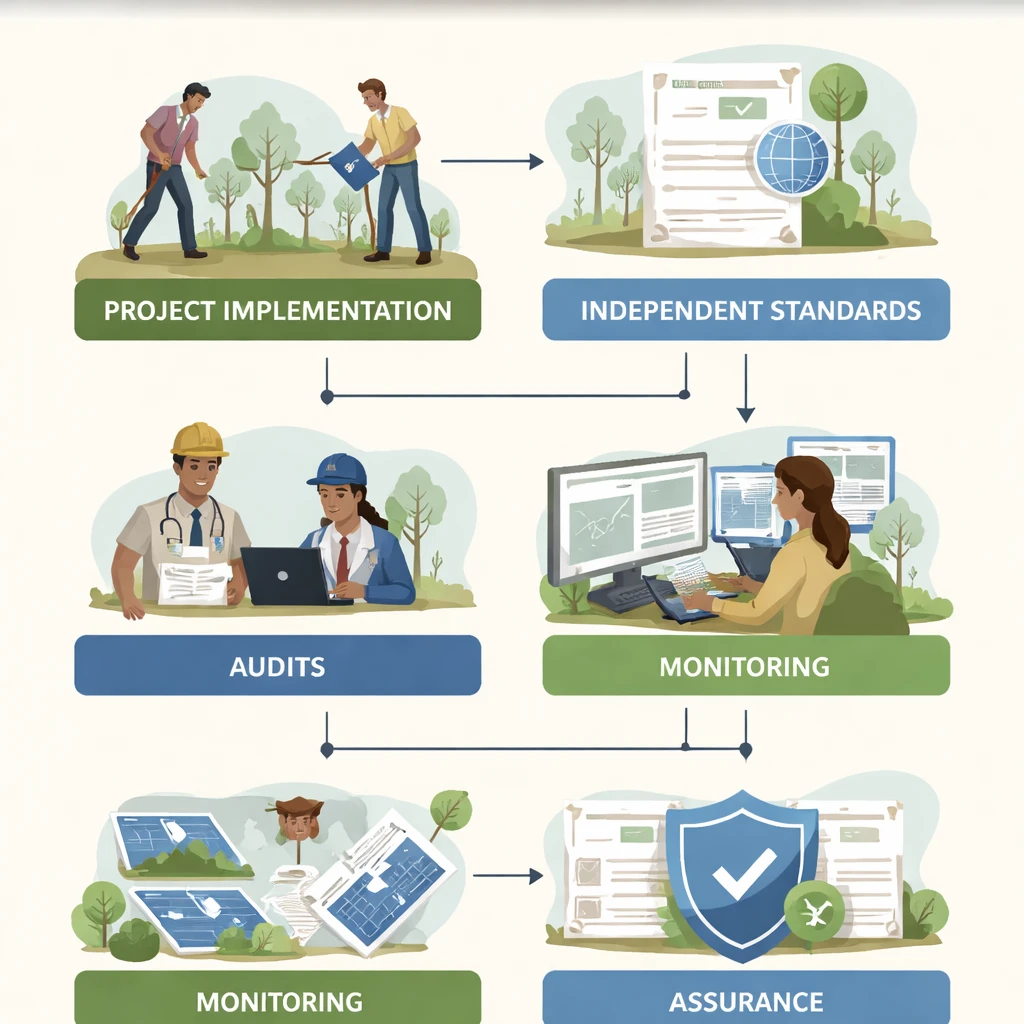
Understand how independent verification helps ensure project credibility.
In recent years, carbon projects have become a key approach for individuals and organizations aiming to address climate change impacts. However, with various claims and terminology involved, understanding how these projects are authenticated is essential. Verification processes aim to provide confidence that carbon projects are progressing as intended, but there are important limitations to what verification can ensure. This guide explains the verification of carbon projects, focusing on the rationale, procedures, and realistic expectations. By understanding verification clearly, users can better assess information and choose options aligned with their values and information needs.
Why Verification Exists
Verification of carbon projects is primarily intended to add credibility and transparency to claims about emissions reductions or removals. Carbon projects often involve complex activities such as reforestation, methane capture, or renewable energy installation aimed at reducing the amount of greenhouse gases in the atmosphere. Given the variety of projects and potential for differing methods, verification helps to establish whether a project is delivering the outcomes it promises.
Without verification, it can be difficult to distinguish between projects that are well-managed and those that may overstate their impact. Verification provides a layer of independent assessment designed to reduce risks such as double counting of emissions reductions, non-delivery, or inaccurate reporting.
Role of Independent Standards
Independent standards play a central role in verifying carbon projects. These standards are developed by expert organizations and set the criteria that projects must meet in design, implementation, and accounting. Examples include the Verified Carbon Standard (VCS), the Gold Standard, and the Climate Action Reserve, each with specific rules and methodologies.
Standards help ensure consistency by defining how emissions reductions are measured, which activities are eligible, additionality criteria (whether the project provides benefits beyond what would have happened anyway), and requirements for monitoring and reporting. By adhering to these standards, projects provide a common framework that auditors and buyers can reference.
Audits and Monitoring
Verification involves systematic audits conducted by independent third-party auditors. These audits review project documentation, measurement methods, and on-the-ground activities to confirm that reported emissions reductions are credible and verifiable.
Monitoring is typically ongoing throughout the project’s life and includes data collection, sampling, and remote sensing when applicable. Auditors may visit the project site to verify actual conditions and data accuracy. This monitoring ensures that projects continue to comply with standards over time.
Audit frequency and depth vary by project and standard but are essential to provide up-to-date information on project performance.
What Verification Can and Cannot Guarantee
Verification provides reasonable assurance that a project is operating according to its stated methodologies and standards. It confirms that, based on available data and methods, emissions reductions or removals are quantified and reported within accepted margins of error.
However, verification cannot guarantee absolute, permanent, or complete emissions reductions. There are inherent uncertainties including measurement errors, natural variations, and changes in project conditions over time. Verification also cannot eliminate all risks such as reversal (where stored carbon might be released back to the atmosphere due to events like wildfires).
Additionally, while verification reduces the risk of fraud, it cannot entirely rule out intentional misrepresentation. Verification depends on the integrity of data and methodology, which may have limitations.
Why Verification Still Matters
Despite its limitations, verification is a crucial tool to improve trust and transparency in carbon projects. It enables buyers and stakeholders to make more informed decisions based on systematic assessments rather than unverified claims.
Verification encourages project developers to follow rigorous standards and maintain accountability throughout a project’s lifetime. It supports market functioning by providing a common language and criteria for comparing projects.
While verification does not guarantee perfection, it contributes significantly to the reliability and credibility of climate mitigation efforts associated with carbon projects.
How ClimeOne Uses Verification Responsibly
ClimeOne integrates verification information to provide users with transparent data on carbon projects’ credentials. The platform highlights the standards projects adhere to and the audit processes they undergo, while also communicating the inherent uncertainties involved.
By responsibly presenting verified data without overstating certainty, ClimeOne aims to support users in interpreting information thoughtfully. This approach helps users understand what verification means in practice, supporting balanced and informed engagement with carbon projects and the broader climate impact landscape.
Key Takeaways
- Verification exists to provide independent, transparent assessment of carbon projects’ emissions reductions.
- Independent standards define consistent criteria and methodologies to evaluate project performance.
- Verification involves audits and ongoing monitoring by third-party experts to confirm reported data.
- Verification offers reasonable assurance but cannot guarantee absolute or permanent emissions reductions due to inherent uncertainties.
- Verification remains important for building trust, accountability, and informed decision-making despite its limitations.
Understanding the verification process helps users engage more confidently with carbon projects. ClimeOne provides verified project data responsibly to support transparent and informed climate-related decisions.
Ready to take action?
Calculate your carbon footprint and see how ClimeOne can help you track and reduce your impact.