
How Carbon Offset Projects Work
A practical overview of how offset projects reduce or remove emissions.
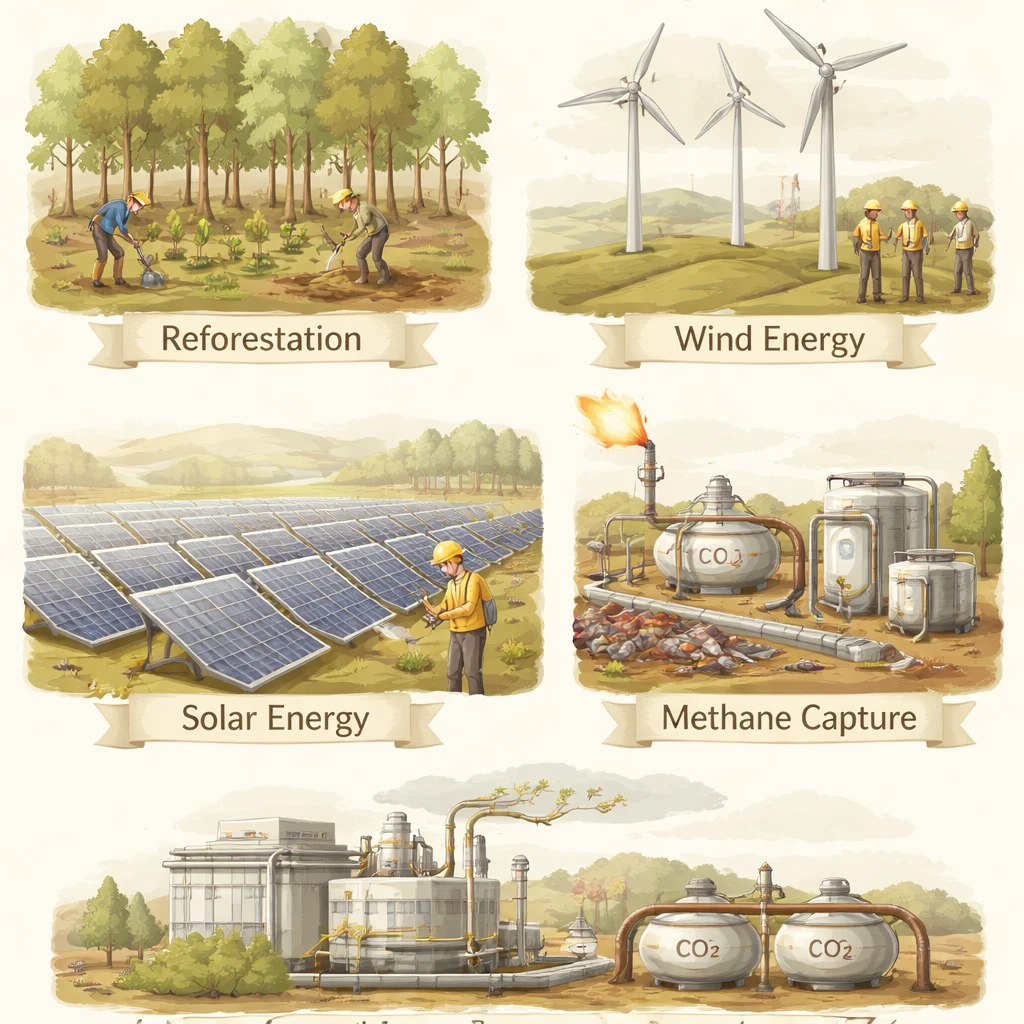
Learn the basics of carbon offset projects and how they create environmental impact.
Carbon offset projects have become a widely discussed part of climate action. However, many people may not be familiar with how these projects function or what they actually achieve. This guide provides a clear overview of carbon offset projects and explains key concepts to help you better understand their role in managing carbon emissions. By the end of this guide, you will understand the difference between emissions reduction and carbon removal, recognize common types of projects, learn how projects are monitored and verified, and appreciate why results can vary. This information can support more informed choices when using tools like ClimeOne for tracking and offsetting your carbon footprint.
1. What Carbon Offset Projects Are
Carbon offset projects are initiatives designed to compensate for carbon dioxide (CO2) or other greenhouse gas emissions produced elsewhere. Essentially, they represent activities that avoid, reduce, or remove emissions from the atmosphere. Individuals or organizations can purchase carbon offsets, which correspond to a quantified amount of emission reduction or removal, helping balance out their own emissions.
These projects vary widely, but share the goal of contributing to lower overall greenhouse gas levels. It's important to note that carbon offsets are based on estimations of emissions impact, which include some inherent uncertainty.
2. Difference Between Emissions Reduction and Carbon Removal
There are two main ways offset projects can impact greenhouse gases:
- Emissions Reduction: These projects focus on decreasing the amount of greenhouse gases released compared to a baseline scenario. For example, capturing methane from landfills to prevent it from entering the atmosphere or switching energy sources from coal to renewable energy.
- Carbon Removal: These projects actively remove CO2 from the atmosphere, storing it in natural or engineered sinks. Examples include planting trees that absorb CO2 through photosynthesis or using direct air capture technology to extract CO2 and store it underground.
While both contribute to managing atmospheric greenhouse gases, carbon removal has the added task of extracting existing emissions, whereas reduction aims to avoid new emissions.
3. Common Project Categories
Typical carbon offset projects can be grouped into several categories:
- Forestry and Land Use: Activities like reforestation, avoided deforestation, and improved forest management that enhance carbon storage in trees and soils.
- Renewable Energy: Projects that generate electricity or heat from wind, solar, hydro, or biomass, substituting fossil fuel-based energy sources.
- Methane Capture and Gas Destruction: Capturing methane emissions from landfills, agriculture (like manure management), or coal mines, which are potent greenhouse gases.
- Energy Efficiency: Initiatives that reduce energy use in buildings, industry, or transportation, thereby lowering emissions.
- Carbon Capture and Storage (CCS): Technologies that capture CO2 from industrial sources or the air and store it underground or use it commercially.
Each project type involves different processes, benefits, and challenges.
4. How Projects Are Monitored and Verified
Carbon offset projects require monitoring to ensure they deliver their claimed reductions or removals. This generally involves:
- Baseline Establishment: Estimating what emissions would be without the project.
- Data Collection: Measuring relevant factors like tree growth, fuel consumption, or methane levels using tools or sensors.
- Third-Party Verification: Independent organizations review project data and calculations to confirm accuracy and adherence to recognized standards.
- Certification: Some projects receive certification from standards like the Verified Carbon Standard (VCS) or Gold Standard, which increases credibility.
Despite these controls, estimates of emission reductions or removals rely on assumptions and models, so some uncertainty remains.
5. Why Results Vary Across Projects
Several factors contribute to differences in offset project outcomes:
- Project Design and Location: Local environmental, social, and economic conditions affect effectiveness. For example, tree growth rates differ by region.
- Measurement Methods: Some projects use direct measurements, others rely on models or proxies, impacting precision.
- Longevity and Risks: Carbon stored can be reversible, as in forests vulnerable to fire or disease, which influences long-term impact.
- Additionality: Whether the project results in emission reductions that would not have happened without it.
- Co-benefits and Trade-offs: Projects may offer extra environmental or social benefits, but sometimes may also have negative effects.
Understanding these factors helps frame offset credits as estimates rather than absolute measures.
How ClimeOne Selects and Presents Projects
ClimeOne incorporates carbon offset projects vetted for transparency and data quality. Projects are presented with clear information on their category, estimated impacts, and verification processes. Users are encouraged to consider the uncertainties involved and view offsets as part of a broader toolkit for managing climate impact.
Key Takeaways
- Carbon offset projects compensate for emissions by reducing or removing greenhouse gases.
- Emissions reduction avoids new emissions; carbon removal extracts existing CO2 from the atmosphere.
- Common project types include forestry, renewable energy, methane capture, energy efficiency, and carbon capture technologies.
- Monitoring and third-party verification provide checks but cannot eliminate uncertainty.
- Variability in project results stems from design, location, measurement method, risk, and additionality factors.
Understanding how carbon offset projects operate can help you make more informed decisions in managing your carbon footprint. ClimeOne aims to support this by transparently presenting project information and the limitations of estimates for thoughtful interpretation.
Ready to take action?
Calculate your carbon footprint and see how ClimeOne can help you track and reduce your impact.