
Does Carbon Offsetting Actually Work?
A clear, evidence-based answer.
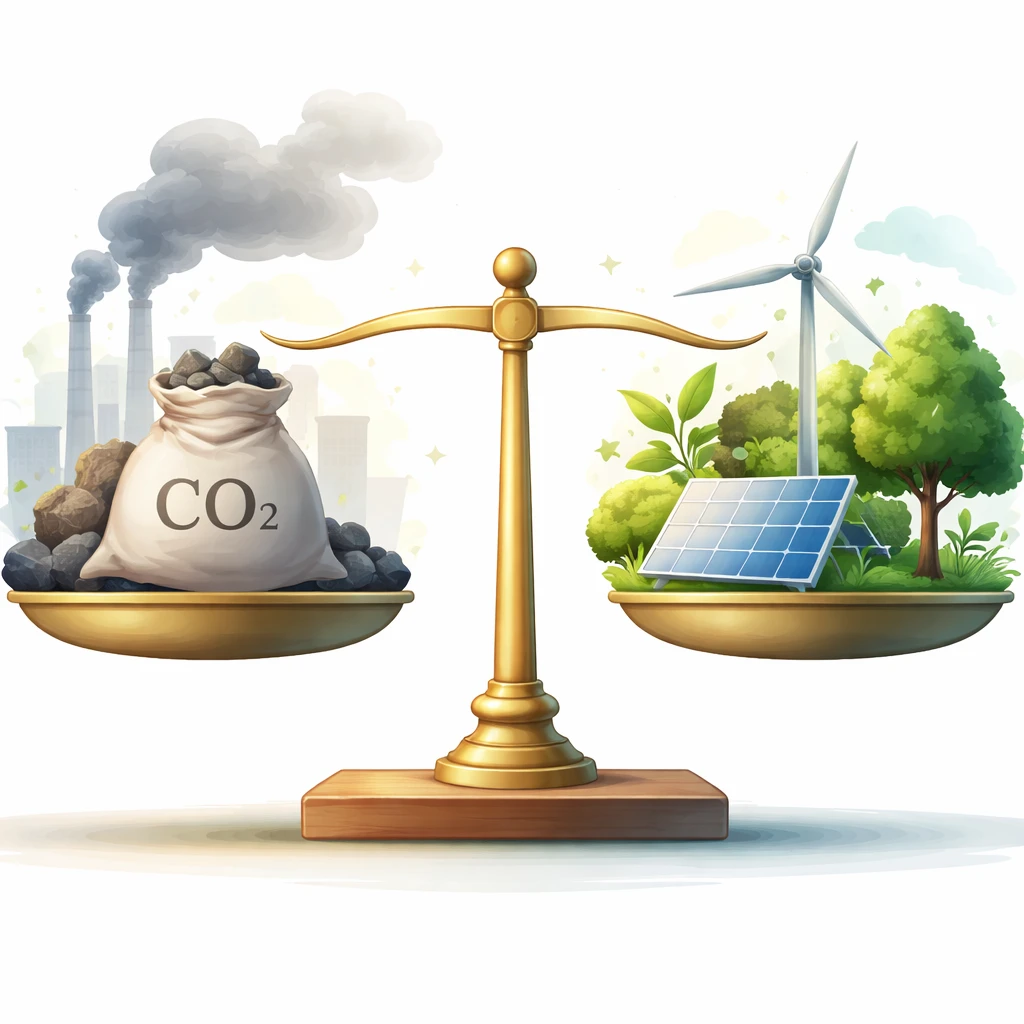
An honest look at the effectiveness and limitations of carbon offsetting.
Carbon offsetting has become a widespread approach for individuals and organizations seeking to address their greenhouse gas emissions. Despite its growing popularity, many people remain skeptical about whether carbon offsetting truly delivers meaningful climate benefits. This guide aims to provide a balanced overview of carbon offsetting by explaining its intended purpose, the challenges it faces, and how it can be used responsibly. By exploring the reasons behind skepticism and outlining the conditions that help ensure credible offset projects, readers can develop a clearer understanding of what carbon offsetting entails. Along the way, this guide highlights how tools like ClimeOne’s carbon calculators can help track and interpret emissions and offsets with transparency and clarity, without suggesting it as a definitive solution.
1. Why People Are Skeptical
Carbon offsetting involves compensating for emissions produced in one place by funding projects that reduce or remove emissions elsewhere. Some skepticism arises because this concept can seem indirect or uncertain compared to simply reducing personal or organizational emissions.
Common concerns include whether offset projects truly deliver the promised environmental benefits, if they might allow companies or individuals to avoid making direct changes, and the difficulty in measuring exact emission reductions over time. Additionally, questions about the permanence of carbon storage and possible unintended consequences contribute to doubts.
2. What Offsetting Is Designed to Do
At its core, carbon offsetting aims to balance out greenhouse gas emissions by supporting initiatives that avoid or capture emissions. Examples of these initiatives include reforestation projects, renewable energy development, and methane capture from landfills.
The goal is to achieve 'net-zero' emissions by ensuring that any carbon dioxide or other greenhouse gases released are compensated for by equivalent reductions or removals elsewhere. Offsetting can help address emissions that are difficult to eliminate directly.
3. Limitations and Trade-offs
While offsetting can contribute to managing emissions, it has inherent limitations:
- Measurement Uncertainty: Estimating exact emission reductions from projects involves assumptions and models, which introduce uncertainty.
- Permanence: Some offsets rely on storage methods like trees, which could be affected by fire, disease, or land-use changes, potentially releasing stored carbon.
- Additionality: It can be challenging to confirm that project activities would not have happened without offset funding.
- Potential for Delay: Relying on offsets might delay more immediate emissions reductions.
These trade-offs mean offsetting should not be seen as a standalone solution, but rather as part of a broader approach to climate impact management.
4. Conditions for Credibility
To be credible, carbon offset projects usually need to meet several conditions:
- Verification: Third-party auditing ensures that claimed emission reductions are accurate and real.
- Transparency: Clear, accessible information about how offsets are calculated and what projects they support helps users make informed decisions.
- Additionality: The project should demonstrate that the emission reductions would not have occurred without the offset funding.
- Monitoring: Ongoing oversight helps track the project's effectiveness over time.
- Permanence Plans: Strategies to reduce risk of carbon re-release are important.
Platforms like ClimeOne aim to provide transparency and clarity around these aspects, helping users understand the assumptions and estimation limits behind offsets.
5. Responsible Use of Offsets
Carbon offsets can be a useful part of addressing climate impact when used thoughtfully:
- Consider offsets as a complement to direct efforts in reducing emissions.
- Use reputable sources and verified offset projects where possible.
- Be aware of estimation uncertainties and avoid assuming offsets entirely neutralize emissions.
- Engage with tools that provide transparent tracking and explanations, such as ClimeOne’s carbon calculators and project information.
Ultimately, understanding the strengths and limits of offsetting can help individuals and organizations make more informed decisions about their contribution to climate goals.
Key Takeaways
- Carbon offsetting aims to balance emissions by funding projects that reduce or remove greenhouse gases elsewhere.
- Skepticism arises due to uncertainties in measurement, permanence, and potential delays in direct emission reductions.
- Offsetting has limitations and should not replace direct efforts to reduce emissions.
- Credible offsets require verification, transparency, additionality, monitoring, and permanence safeguards.
- Responsible offset use involves complementing emission reductions, choosing verified projects, and understanding uncertainties.
By exploring carbon offsetting with an understanding of its purposes and limitations, you can more responsibly interpret your own carbon footprint data. Tools like ClimeOne support transparent tracking and help clarify how offsets fit within broader climate actions.
Ready to take action?
Calculate your carbon footprint and see how ClimeOne can help you track and reduce your impact.