
Carbon Removal vs Emissions Reduction: What’s the Difference?
Understanding the difference — and why both matter.
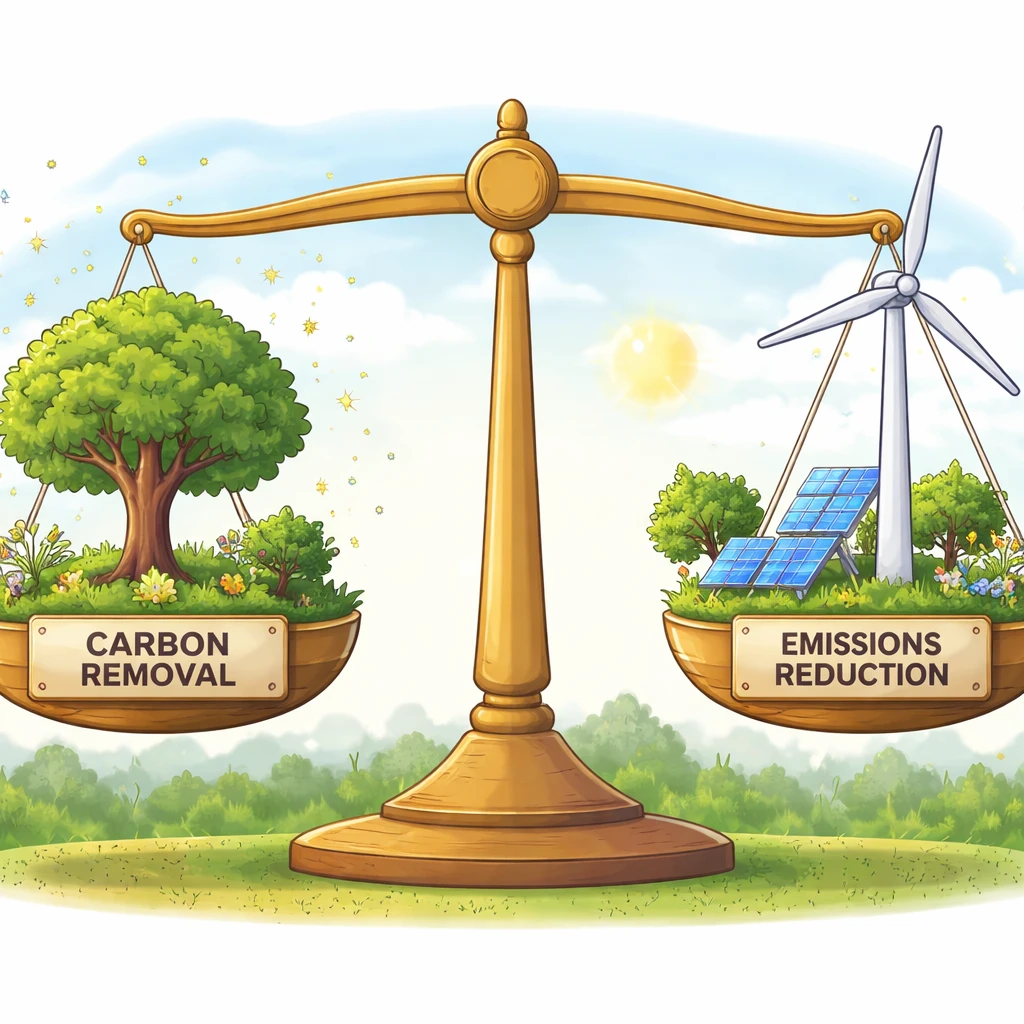
A clear explanation of two major categories of carbon projects and their roles.
Climate discussions often mention terms like "carbon removal" and "emissions reduction," but these concepts can be confusing for those new to the topic. Understanding what these terms mean and how they differ is important for grasping how individuals and organizations approach climate impact. This guide explains the basics of carbon removal and emissions reduction, provides examples of each, and explores why both play roles in addressing carbon in the atmosphere. It also describes how platforms like ClimeOne consider these approaches when supporting climate projects. Our goal is to offer clear, practical information without pressure or judgment, helping you interpret these concepts thoughtfully.
1. Definitions of Carbon Removal and Emissions Reduction
Emissions Reduction refers to actions that decrease the amount of carbon dioxide (CO2) or other greenhouse gases released into the atmosphere. This can involve using less fossil fuel, improving energy efficiency, or switching to cleaner energy sources.
Carbon Removal involves taking existing CO2 out of the atmosphere and storing it in a way that keeps it from contributing to warming. This can happen naturally through trees and soils or technologically through machines designed to capture CO2.
2. Examples of Each
- Emissions Reduction Examples:
- Using public transportation instead of a gasoline car
- Installing energy-saving lighting in a home
- Switching to electricity from renewable sources like wind or solar
- Carbon Removal Examples:
- Planting trees that absorb CO2 as they grow
- Restoring wetlands or peatlands which store carbon in soil
- Using machines that capture CO2 directly from the air and store it underground (direct air capture)
3. Strengths and Limitations
Emissions Reduction Strengths: Helps limit new carbon entering the atmosphere; often associated with improving efficiency or switching to cleaner options.
Limitations: It may not address carbon already in the atmosphere and can vary in ease and cost depending on the activity.
Carbon Removal Strengths: Addresses existing CO2 and can help balance emissions that are difficult to eliminate.
Limitations: Some methods take time to have effect (e.g., tree growth), and technological methods can be expensive or still developing.
4. Why Both Approaches are Used
5. How ClimeOne Balances Project Types
ClimeOne supports and tracks a variety of climate projects, including both emissions reduction and carbon removal types. By providing transparent information, ClimeOne helps users understand the nature of these projects and their estimated impacts. This balanced approach reflects the understanding that, at present, combining multiple strategies contributes to addressing carbon footprints.
Key Takeaways
- Emissions reduction means lowering new greenhouse gas releases, while carbon removal extracts existing CO2 from the atmosphere.
- Examples of emissions reduction include using renewable energy and improving efficiency; examples of removal include planting trees and direct air capture.
- Each method has benefits and challenges; neither fully replaces the other.
- Using both approaches helps address carbon emissions more comprehensively.
- ClimeOne includes both project types to provide a balanced view of climate impact efforts.
Understanding the distinctions between carbon removal and emissions reduction can support more informed decisions about climate impact. Tools like ClimeOne offer resources to explore and track these approaches transparently.
Ready to take action?
Calculate your carbon footprint and see how ClimeOne can help you track and reduce your impact.